The Iranian government is still hanging on, but there are signs that control is slipping.
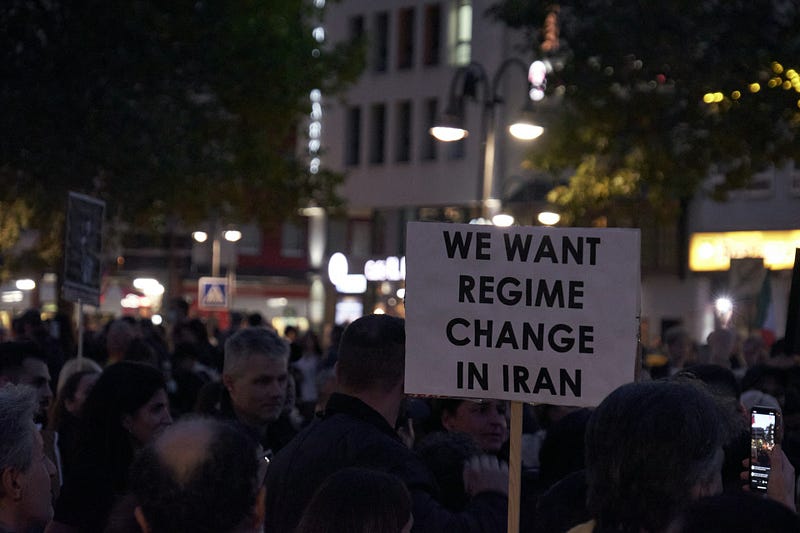
One of the strangest and most revealing signs coming out of Iran right now is not a battlefield map or a diplomatic leak.
It is a price tag.
Reports from inside the country are emerging of apartments, rentals, used cars, and even a now-famous pizza in Tehran being priced in U.S. dollars instead of trusted in rials. That does not mean the Iranian government has officially switched currencies.
On the contrary.
It means something arguably more important: in parts of Iranian life, people are beginning to behave as though the national currency no longer performs one of a currency’s most basic functions, which is to hold value long enough for ordinary people to plan their lives around it.
That matters because states do not govern only with guns, prisons, and propaganda. They govern with confidence. A functioning government convinces people that tomorrow’s money will still be money tomorrow.
When shopkeepers, landlords, car dealers, and ordinary consumers start mentally converting everything into dollars, that is not just inflation. It is a quiet vote of no confidence. It is the market saying, long before the political class admits it, that the state’s grip on economic reality is weakening. Inference from the reported spread of dollar-pegged pricing, the rial’s collapse, and the turn to hard currency as a store of value supports that conclusion.
The backdrop to this was already ugly. In January, the rial hit a record low of 1,500,000 to the dollar on the unofficial market. Worse, the rial lost nearly half its value in 2025. That kind of collapse is not a technical problem. It is social acid. It eats wages, savings, pensions, and trust. It tells every Iranian with any disposable cash that the smart move is to get out of rials and into something harder: dollars, gold, property, anything. Once people start doing that in earnest, the national currency may still exist on paper, but it is no longer commanding real loyalty.
That is why the dollar-pricing stories matter even if they are still partial and informal.
According to recent reporting, the trend first looked like a curiosity: a “five-dollar pizza” in Tehran’s affluent Niavaran neighborhood. But over time it moved beyond gimmick territory. Property sales and rentals were increasingly advertised in dollars. Traders were reportedly pricing vehicles in dollars too. Economists quoted in that coverage warned of “dollarization,” meaning not a formal decree from the regime but a creeping social adaptation in which people use the rial less as a store of value and less as a unit of account.
Governments can order what currency must be used by law. They cannot force people to believe in it.
None of this means the Islamic Republic is about to vanish. It is still hanging on, if barely, and hanging on hard. The regime remains capable of repression on a terrifying scale.
Reuters reported this week that authorities had arrested 466 people accused of online activity deemed harmful to national security, part of a much wider security crackdown. Iran has also continued implementing sentences tied to the January unrest, while AP reported fears of a broader wave of executions after three young men were hanged last week. A government that can still arrest, execute, intimidate, and flood the streets with security forces is not a government that has lost control altogether.
But that is precisely the point. Control is not slipping everywhere at once; it almost never does. It is slipping unevenly. The coercive arm of the state is still very much alive. The economic and psychological arm looks weaker.
Despite daily bombardment, Iran is still capable of using insurgent-style tactics, threatening shipping through the Strait of Hormuz, and inflicting economic pain far beyond its borders. At home, though, the situation is an angry population, recruitment strains, active Basij patrols, and unanswered questions around leadership and command.
That is not the portrait of a stable, self-confident regime. It is the portrait of a wounded regime trying to survive long enough to call survival victory.
And survival is not the same thing as authority.
A regime can survive while losing legitimacy. It can still jail people while losing the power to anchor prices. It can still punish dissidents while failing to persuade citizens that its money is real money. In some ways, dollar-pegged pricing is more embarrassing than an anti-government slogan. A slogan can be denounced as treason. A dollar-pegged apartment listing is harder to dismiss. It is not rhetoric. It is adaptation. It is an ordinary person making a practical decision based on what he thinks the regime cannot protect.
There is also a deep irony here. The Islamic Republic has spent decades defining itself in opposition to the United States. Yet now, in at least some corners of Iranian economic life, the currency of the “Great Satan” appears more trusted than the currency issued by the Iranian state.
Symbolically, that is devastating. When people begin measuring value in the money of the country you tell them to hate, your ideological control is no longer total, no matter how loudly your officials talk. This is an inference from the reported spread of dollar-based pricing rather than an announced state admission, but it is a revealing one.
So yes, the Iranian government is still hanging on. It still has prisons, loyalists, guns, and enough institutional muscle to keep ruling for now. But there are signs that control is slipping, and one of the clearest signs is economic rather than military. When a state loses its monopoly on belief in its own currency, it has not yet lost power. But it has started losing something essential: the everyday consent that makes power feel normal. That may not topple a regime tomorrow. But it is exactly the kind of thing that tells you the regime is weaker than it looks.
(Contributing writer, Brooke Bell)